Showing posts with label identity. Show all posts

Tuesday, 17 February 2009

Power of you

Last night, I watched a movie called Ghost Dog.

In this decade-old film, a lone hitman tries to keep to the way of the old Japanese samurai. Great film, no great acting, amazing atmosphere.

In this movie, like so many others, an individual goes against the mainstream in both philosophy and action. In real life, however, most of us merely follow the crowd.

It is a funny thing; we all want to be part of something, yet we all want to be unique and different. We are part of the group, and yet not part of the group. A constant struggle of identity.

To completely and utterly break free of the crowd is hard and rare. Most often, people choose to belong to another, often obscure group. Common examples are the goth subculture, various religious groups, and, in a way, artists. To really break free and become your own group of one, is something not often seen.

And yet, it is so much easier than it appears. Just stop trying to be someone other that who you are.

All of us are unique. All of us are alike. It is that blend of characteristics that make us who we are. So just stop trying to be someone you're not, and be yourself.

Then you'll be unique. And yes, part of a group. A group of individuals.

Tuesday, 20 January 2009

Fear not the darkness

'Maybe there is a beast....maybe it's only us.'
~ William Golding: Lord of the flies

Both for our early ancestors and for modern man, night is a scary time of day. The inevitable darkness hides everything that is not illuminated by the light of a campfire or a lamp post; scary monsters can lurk nearby, just out of sight.

Mankind's active imagination turns innocent noises into threatening foes. It is wise to suspect the worst, so every bird in the undergrowth can be a pack of wolfs in waiting; every backstreet mouse can be a serial killer looking for a victim.

While this simple principle can be effective and even life-saving, it is inherently flawed. The real world holds far less dangers than the mind perceives. Likewise, what is optically revealed by the light is not always so innocent and true to its appearance as one might hope.

People who fear the darkness, fear their own imagination more than anything.

It has been said that most of the human brain is not used. While this statement is controversial, it does imply that mankind may not be living up to its potential, which sounds like a fair assumption. Are you living up to all your potential, in every way? Not likely -- but I mean that without offense. Growing in one direction means simply not growing (much) in another direction.

Much untapped potential still exists, and why would anyone want to waste such precious possibilities? Would you not rather be the person you can be, rather than the empty shadow of that complete self?

Do not be scared of the darkness within you. Explore the deep depths of your own mind, uncover the secrets that are hidden still, and expose the harmless spectres of your own fear. Understand yourself -- improve yourself.

Stop fighting your inner demons; accept them. They're merely another part of you.

Only thus can you face the challenges life throws your way. The mere sight of your confidence will change the mind of many who seek to oppose you.

Imagine, if you will, the imposing figure of Darth Maul. More than his mastery with both the Force and the blade, the complete control over himself and the selfconfidence are what make this Dark Lord so terrifying.

Fear not the darkness within you; embrace it.

Friday, 25 July 2008

Goth the life -- revisited

Somehow I've managed to not talk about one of my other fascinations. That is shocking to me, since it's possibly an even bigger obsession than Star Wars and blogging together. I know, it's that bad.

I've always been a fan of fantasy and the line between reality and makebelieve is one I find very interesting indeed. And as macabre as it may sound, the role death plays in that.

Sounds creepy? I bet. But I've always been fascinated by so-called "gothic novels" and the gothic subculture.

And vampires.

Vampires and the goth lifestyle are often associated, for obvious reasons. Goth wear black clothes, often oldfashioned style, dye their hair black and pale their faces. The resemblance to an undead corpse isn't that farfetched.

However, both vampires and goths are often misinterpreted. When talking about vampires, people quickly start to talk about stakes, garlic and full moons. Full moons? That's werewolves for you. Their ancient enemy. But vampires are fascinating. I once did an essay on them, and discovered that although cultures around the world have their own sort of vampires - just like dragons - they are all just a bit different.

So what defines a vampire?
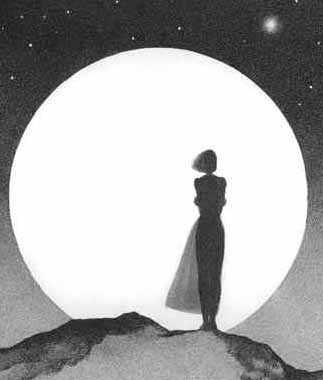
Is it being a walking corpse? Nah, some cultures believe in vampires that have nonhuman origins, or no origin in life at all. Is it the human appearance? Nah, some believe in vampires made of flames. Is it the seducing aspect? Nah, some vampires are just plain gross. Kind of like zombies.

Is it the blooddrinking? There are some creatures that do not drink blood, yet they are most definately vampires.

So what defines a vampire?

And what defines a goth?

Goth, in my opinion, is misinterpreted by many people, even goths. Does that sound ridiculous? I'm sure. But please realize just how many people just try to fit in, even in such small and remarkable groups. However, misunderstanding is more common amongst those who are not gothics.

I once had a conversation with a religious woman who had read about goths, yet she never had encountered any. She was appalled, yet fascinated. Of course the article, in a christian magazine, was not too objective, and often reminded readers that some goths deny god, or are satanists. And I explained, that the essence of goth is not that.

Goth, in essence, is a philosophical view of life, in which death is acknowledged as the ultimate certainty. Every being is subject to death, human and animal alike, and also angels, demons and gods. Goths are not religious by that view, since they do not see any god or devil as mightier than death. Satanists are not gothics.

However, the misunderstanding stems from that view of death. Many people think gothics are fascinated by death, yet the opposite is true. In accepting the finality of death, gothics take more pleasure in life.

Gothics enjoy life on a more conscious level than most of us.

I know there are people that call themselves goths and disagree with this. But in essence, this is what gothic is all about. Misunderstanding comes from too few explanations from the gothic subculture, but also because people don't bother to look under the eerie surface.

I would call myself gothic if it wasn't for the fact that I don't wear makeup. I do like dark medieval-looking clothes, and I love the silvery jewelry with pentacles and such. I am not fascinated by death, yet I am fascinated by vampires. The nightstalking undead, caught between their previous lives and the death they cannot reach. The ultimate exception to the ultimate truth.

Please don't look down on goths ever again.

Sunday, 24 February 2008

Who am I?

A seemingly simple question -- who am I?

One could say I am a guy called DragonFang to some and Nils to some others. One could say I am a friend, or a lover, or a son. One could state I am a psychologist, or a dreamer, or perhaps a nice guy. And one would be correct in all cases (I hope).

However, those descriptions do not define me.

There is something, beyond words, that defines my identity -- who I am, and nobody else is. Everyone feels it instinctively. The moment a child realizes its identity does not stretch out beyond itself -- their mommy and daddy do not know what it has done in their absence. The line between oneself and the outside world. The line that defines my being.

Nothing I do or am is unique; however, every person is unique. This is probably the individualist's paradox -- one doesn't want to be part of the crowd, but in doing so becomes a part of (another) crowd that wants to be unique. People try to define themselves based on what they are not, but achieve the opposite effect.

It is a paradox I can't escape from, and from it springs my question -- who am I? Am I a unique individual at all?

Interestingly, people in less individualistic societies (China, North-Korea, even Eastern Europe) define themselves exactly by referring to their social class. They are a farmer, or a businessman, or a mother. What makes them special is generally not what they think of.

Perhaps we are not as unique as we would like to believe. To paraphrase Tyler Durden, perhaps I am not a beautiful and unique snowflake, but I am merely the same decaying matter as everything else.

And only in death will I have a name -- on a fading tombstone, eroded and finally forgotten.